

Bath Abbey Travel Guide
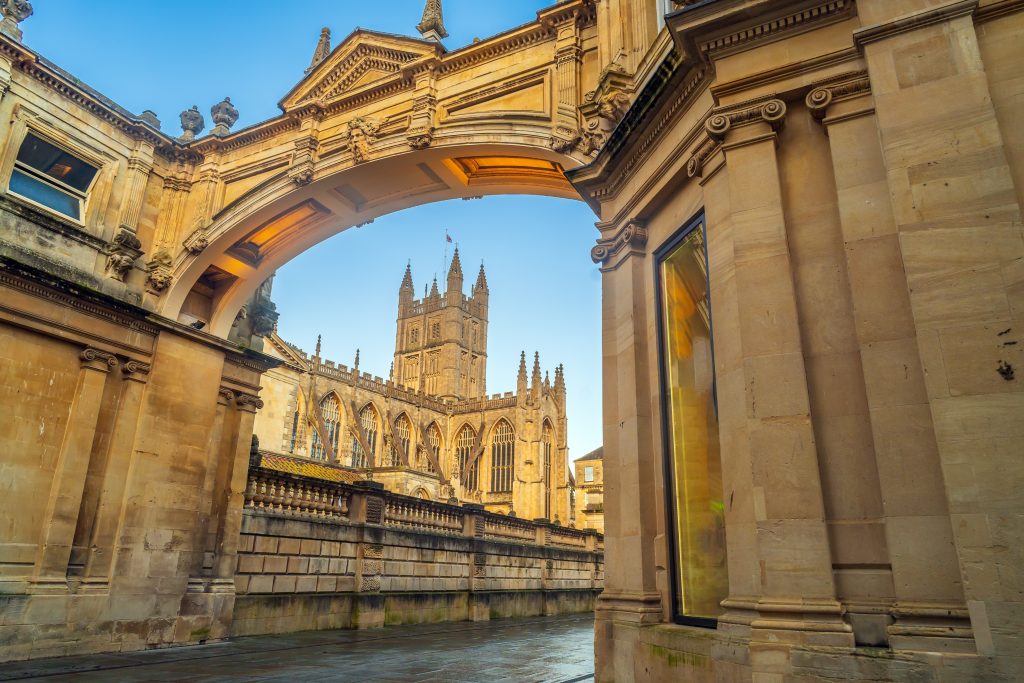
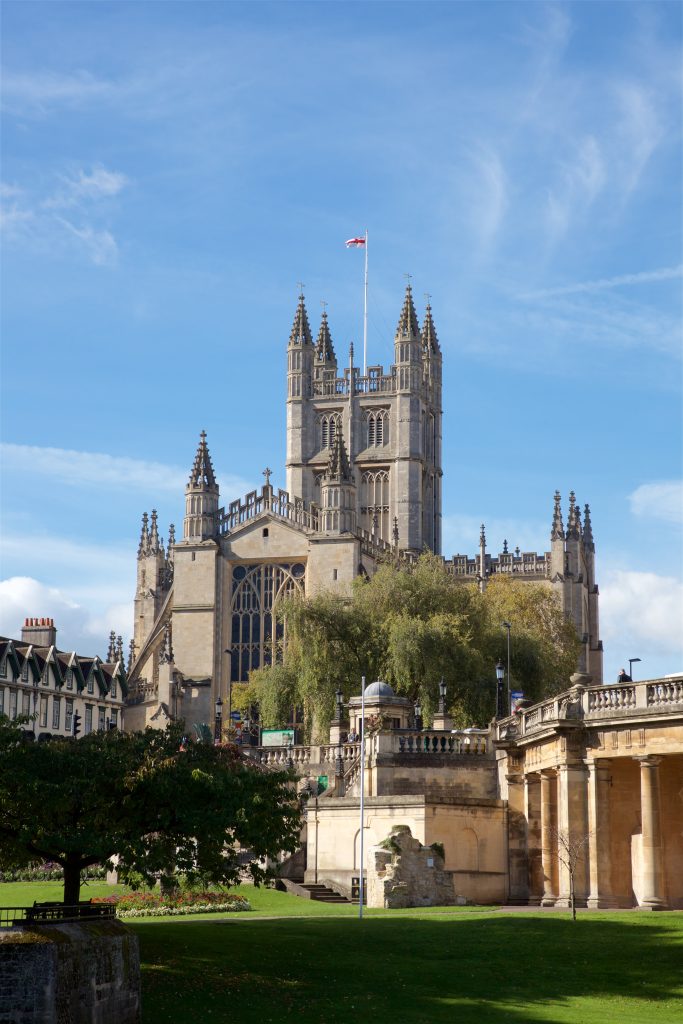
Bath Abbey is a 16th-century Anglican church at the heart of Bath, built on a site of Christian worship stretching back to the 7th century. It is not a ruin or a museum ;it’s an active parish church welcoming over 450,000 visitors per year, with one of the finest fan-vaulted ceilings in England.
On this page
What to See & Do at Bath Abbey
The Fan-Vaulted Ceiling
The nave ceiling of Bath Abbey is one of the architectural highlights of any church in England. According to Bath Abbey’s own records, the current fan vaulting was completed in the Victorian era following the original Tudor design commissioned by Bishop Oliver King in 1499, making it one of the last great Gothic churches built before the Reformation. On a bright day, when light pours through the 56 stained glass windows and illuminates the stonework overhead, it’s a genuinely arresting sight. This is the feature most visitors come specifically to see.
The West Tower & Angel Ladders
The west facade is carved with two sets of angels ascending and descending ladders, a literal depiction of Bishop Oliver King’s dream in 1499, which he took as divine instruction to rebuild the Abbey on this site. The Tower Tour offers the chance to climb inside the structure, past the bell-ringing chamber and clock mechanism, to 360-degree views across Bath’s Georgian rooftops. According to Visit Bath, the Tower Tour is one of the most popular paid experiences in the city and books up quickly in summer (pre-booking is recommended).
The Memorial Tablets
The interior walls and floors are lined with over 600 memorial tablets from the 17th, 18th, and 19th centuries, many belonging to Georgian visitors who came to Bath for the spa waters. The most prominent commemorates Beau Nash, the 18th-century “King of Bath” who transformed the city into England’s leading social resort. The Abbey is not a conventional museum, but these tablets function as one of the most vivid social histories in any building in Britain.
The Visitor Centre (Undercroft)
The undercroft houses a small museum telling the story of the Abbey from its Saxon origins to the present day. According to Historic England, the foundations of a Norman cathedral – built on this site before the current Abbey – are visible through glass panels in the floor.
Bath Abbey at a Glance
| What | Details |
|---|---|
| Best for | Architecture lovers, history enthusiasts, city-break visitors |
| Top attraction | Fan-vaulted ceiling |
| Best time to visit | Weekday mornings; avoid Sundays when services run |
| Entry fee | Free (£4 suggested donation); Tower Tour ~£8 |
| Time needed | 45 mins–1 hour; add 1 hour for Tower Tour |
Visiting Practicalities
| Experience | Cost | Booking |
|---|---|---|
| Abbey entry (nave & choir) | Free (£4 suggested donation) | Walk-in |
| Tower Tour | ~£8 per adult | Pre-book recommended |
| Undercroft Visitor Centre | Small charge | Walk-in |
| Services & concerts | Free | Check abbey website for schedule |
Bath Abbey is open to visitors most days of the year. It is not open to general visitors during services — check the Bath Abbey website for the current schedule before visiting on a Sunday or during religious holidays.
Getting to Bath Abbey
Bath Abbey is in the pedestrianised centre of Bath, 8 minutes on foot from Bath Spa railway station. Direct trains run from London Paddington (approximately 90 minutes, Great Western Railway), Bristol Temple Meads (15 minutes), and Cardiff Central (60 minutes). Driving into Bath is not recommended — the city’s park-and-ride scheme runs services every 10-15 minutes into the centre and is the most practical option for drivers. For everything about getting to and around Bath, see our Bath travel guide.
Great British Trips Including Bath Abbey
Discover Bath City Break A 3-night guided exploration of Bath covering the Roman Baths, Royal Crescent, Pulteney Bridge, and Bath Abbey — with time built in for the Tower Tour. Explore this itinerary →
England’s South West: Bath, Cotswolds & Bristol A 7-day tour starting in Bath, with a morning at Bath Abbey before heading north into the Cotswolds and then west to Bristol. Includes Castle Combe as a day excursion from Bath. Explore this itinerary →
Frequently Asked Questions
What is Bath Abbey known for?
Bath Abbey is known for its outstanding Perpendicular Gothic architecture, particularly its fan-vaulted ceiling — one of the most elaborate in England — and its 56 stained glass windows. The west tower is carved with angels ascending ladders, depicting a dream of Bishop Oliver King that inspired the current building in 1499. The Abbey also contains over 600 memorial tablets, earning it the nickname ‘the lantern of the west’.
Is Bath Abbey free to enter?
Bath Abbey is free to enter for worship and prayer at any time. A suggested voluntary contribution of £4 per adult is requested, though not compulsory. The Tower Tour costs around £8 per adult and should be pre-booked. The Visitor Centre in the undercroft has a small admission charge.
Is Bath Abbey worth visiting?
Yes, the fan-vaulted ceiling alone justifies the visit, and the Abbey’s central location means it fits naturally into any day in Bath. It’s less crowded than the Roman Baths next door and provides a quieter counterpoint to the museum experience. The Tower Tour is highly recommended on clear days for the views over Bath’s Georgian rooftops.
How long do you need at Bath Abbey?
Allow 45 minutes to an hour at your own pace. If you take the Tower Tour, add another hour. The Abbey is often used as a starting point for a wider Bath city walk.
Can you visit Bath Abbey and the Roman Baths on the same day?
Yes, and most visitors do — they’re directly adjacent. Allow a full day for both. The Roman Baths typically takes 2 hours; the Abbey around 45 minutes to an hour. The Abbey is free; the Roman Baths charges admission.