

Bibury Travel Guide
Bibury is a Cotswolds village on the River Coln in Gloucestershire, home to Arlington Row, a terrace of 14th-century weavers’ cottages that the National Trust describes as one of the most photographed scenes in England. It is not a theme park or managed attraction, the cottages are lived in, the river is a working chalk stream, and the village has changed little since William Morris called it “the most beautiful village in England” in 1876.
On this page
What to See & Do at Bibury
Arlington Row
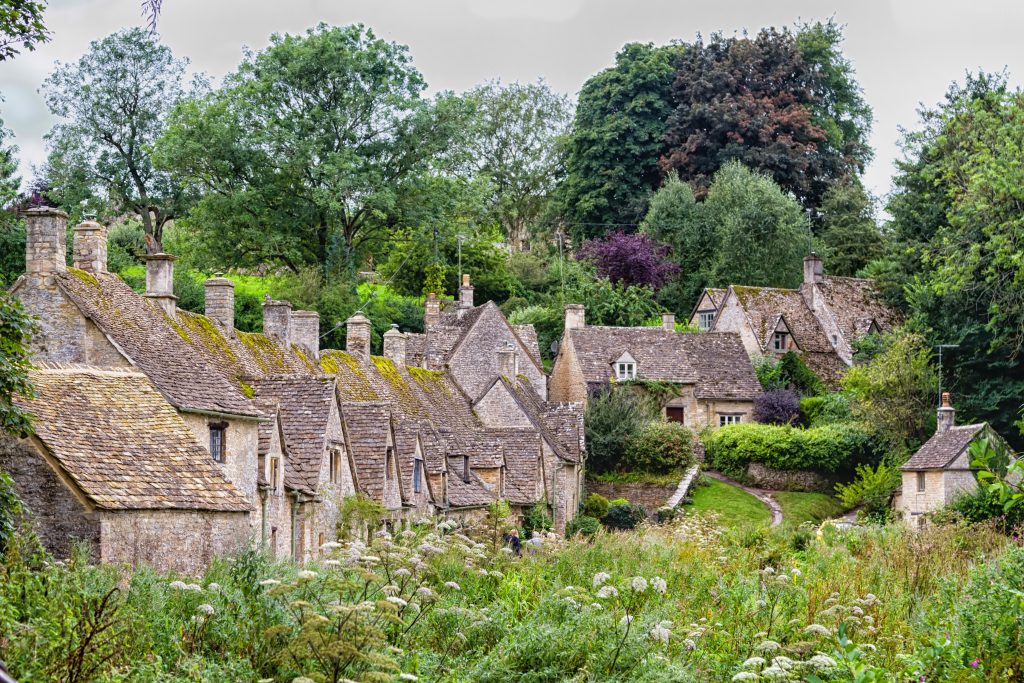
Arlington Row is a curved terrace of low Cotswold stone cottages set behind a water meadow called Rack Isle, named for the wooden racks on which weavers once hung their cloth to dry. The National Trust pathway alongside the row is freely accessible at all times. Arlington Row is not open to the public inside, the cottages are private residences. The classic photograph is taken from the far bank of the River Coln, looking across the meadow toward the terrace. According to the National Trust, the site receives hundreds of thousands of visitors annually, making early morning visits on weekdays in spring or autumn the best option for a quieter experience.
Bibury Trout Farm
Established in 1902, Bibury Trout Farm is one of the oldest working trout farms in England. Visitors can feed the fish in open rearing pools, watch the full lifecycle of brown and rainbow trout, and purchase freshly caught fish to take away. According to Visit the Cotswolds, the trout farm is one of the most family-friendly stops in the southern Cotswolds, with no need to pre-book. A small café is on site and the farm is open most of the year.
Church of St Mary
The Church of St Mary dates from Saxon times, with significant Norman additions visible in the chancel arch and the stonework around the doorway. The churchyard contains several ancient yew trees and is considered one of the most atmospheric in the Cotswolds. The church is open during daylight hours and entry is free. It is not maintained by the National Trust, it’s an active Church of England parish.
River Coln Walk
A footpath follows the River Coln east from Bibury toward Coln St Aldwyns (2.5 miles), passing through willows, water meadows, and past the trout farm. The Coln is a designated chalk stream, one of only around 200 in the world, the majority of which are in southern England. Kingfishers are regularly spotted on this stretch of river, particularly in spring.
Bibury at a Glance
| What | Details |
|---|---|
| Best for | Photographers, Cotswolds walkers, families |
| Top attraction | Arlington Row (National Trust; free access) |
| Best time to visit | Weekday mornings, April–June or September–October |
| Entry fee | Free (village open access); Trout Farm has small charge |
| Time needed | 2-3 hours; half day with river walk |
Getting to Bibury
| Route | From | Journey Time | Notes |
|---|---|---|---|
| Train + taxi | London Paddington → Kemble, then taxi | ~110 mins total | ~10 miles from Kemble station |
| Car | London (A40) | ~2 hours | Small pay-and-display car park in village |
| Car | Cirencester | ~20 mins | 7 miles north-east via A433 |
| Car | Bourton-on-the-Water | ~20 mins | 9 miles south-west via B4068 |
Bibury is not served by a railway station or a regular bus service. The nearest rail connection is Kemble station, approximately 10 miles south-west, reached from London Paddington in around 90 minutes. Taxis from Kemble take 20-25 minutes. By car from London, the drive takes approximately 2 hours via the A40 and A429, with a small pay-and-display car park in the village centre, this fills quickly in summer. Most visitors find Bibury easiest to reach as part of a guided Cotswolds tour. For transport options across the region, see our Cotswolds travel guide.
Great British Trips Including Bibury
Travelling to the Cotswolds A comprehensive Cotswolds itinerary covering Chipping Campden, Bourton-on-the-Water, and the southern villages including Bibury and Cirencester. Ideal for first-time visitors wanting to cover the full breadth of the Cotswolds in one trip. Explore this itinerary →
England’s South West: Bath, Cotswolds & Bristol A 7-day tour beginning in Bath, moving north through the Cotswolds with a stop at Bibury, then west to Bristol. Includes Castle Combe as an excursion from Bath. Explore this itinerary →
Frequently Asked Questions
What is Bibury known for?
Bibury is known for Arlington Row, a terrace of 14th-century weavers’ cottages that is one of the most photographed scenes in England and appears inside the British passport. The village was called ‘the most beautiful village in England’ by William Morris in 1876 and sits on the River Coln, which attracts fly fishermen and supports wild brown trout. Bibury Trout Farm — one of the oldest in England — is a popular stop for families.
How far is Bibury from Bourton-on-the-Water?
Bibury is approximately 9 miles (15 km) south-west of Bourton-on-the-Water, a drive of around 20 minutes via the B4068. The two villages are often combined as a half-day Cotswolds excursion. There’s no direct public transport link, so a car or organised tour is the most practical option.
Is Bibury worth visiting?
Bibury is worth visiting for Arlington Row alone — it’s genuinely one of the most beautiful cottage terraces in England and the reality lives up to the photographs. It’s very small and best combined with nearby Burford, Bourton-on-the-Water, or Cirencester. Visit on a weekday morning in spring or autumn to avoid the worst of the summer crowds.
How long do you need in Bibury?
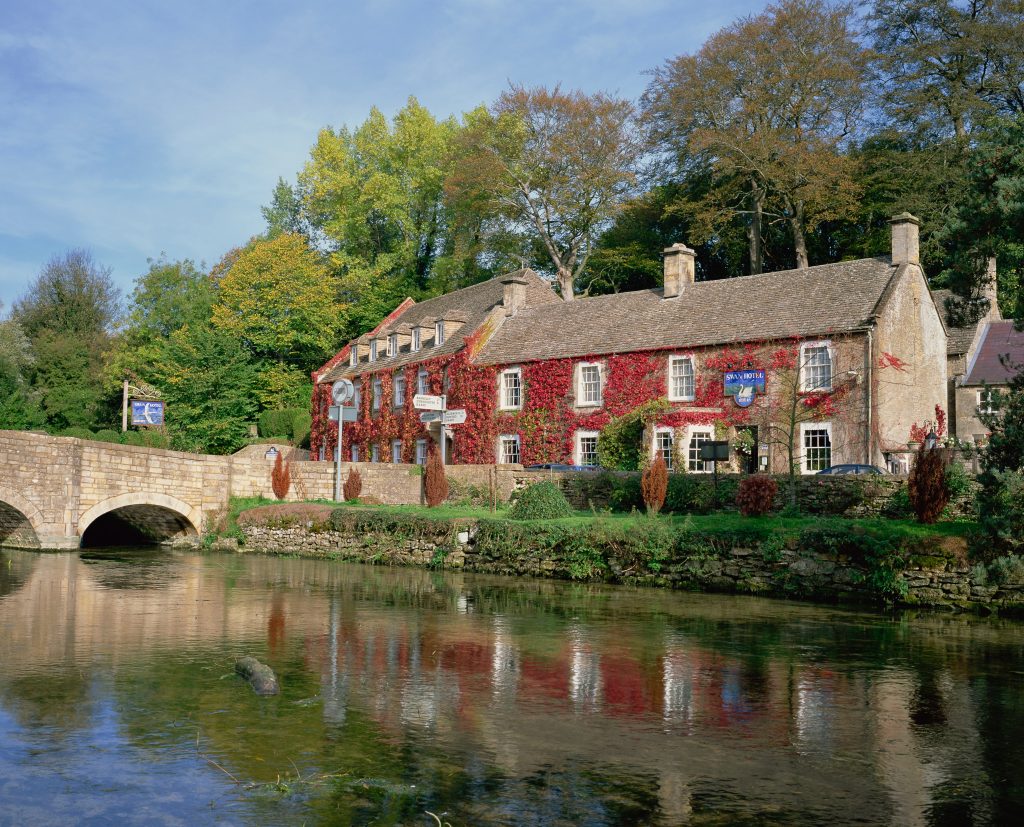
Most visitors spend 2-3 hours — enough time to walk Arlington Row, visit the Church of St Mary, walk along the River Coln, and stop at Bibury Trout Farm. For a longer visit including lunch at the Swan Hotel or the riverside walk to Coln St Aldwyns, allow a half day.
Can you visit Bibury as a day trip from London?
Yes, but it requires planning as there’s no direct rail link. The most practical route is train from London Paddington to Kemble (around 90 minutes), then a taxi for the final 10 miles. Organised Cotswolds day trips from London typically include Bibury alongside other villages. Driving from London takes around 2 hours via the A40.