
Cosy Pubs and Country Inns: A Winter Guide to Britain’s Best Watering Holes
There is a moment, usually around mid-November, when the British pub comes into its own. The days have shortened, a damp chill hangs in the air, and the glow of a log fire glimpsed through a leaded window becomes genuinely irresistible. Step inside, and the world outside ceases to matter. There is warmth, there is conversation, and there is almost certainly a well-kept pint waiting on the bar.
For international visitors, the pub is often the single most memorable part of a trip to Britain and Ireland. Not the palaces, not the castles, not even the countryside, magnificent as it all is. The pub is where you meet the country on its own terms: unhurried, unpretentious, and surprisingly welcoming to strangers.
This guide is an invitation to seek out some of the finest pubs and country inns across England, Scotland, Wales, Northern Ireland, and Ireland, places where history seeps from the walls and the fire never quite goes out. Whether you are drawn to ancient coaching inns, clifftop taverns, or a riverside pub where the water laps at the garden wall, winter is the season to find them at their most atmospheric.
The Ancient Ones: Pubs With Centuries of Stories
Few countries can match Britain for the sheer age of its drinking establishments. Some of these pubs have been serving travellers since before Columbus set sail, and stepping through their doors feels like slipping between centuries.
Ye Olde Trip to Jerusalem, Nottingham, England
Carved into the sandstone rock beneath Nottingham Castle, Ye Olde Trip to Jerusalem claims a date of 1189, making it one of the oldest pubs in England. The name references the Crusades; knights supposedly stopped here for an ale before their long journey to the Holy Land. The cave-like rooms, hewn directly from the rock face, remain wonderfully atmospheric. In winter, with the low ceilings trapping the warmth and candlelight flickering off ancient stone, it feels like drinking inside a geological formation. Which, in fairness, you are.
The Brazen Head, Dublin, Ireland
Across the Irish Sea, The Brazen Head on Bridge Street in Dublin claims to have been pulling pints since 1198, making it one of Ireland’s oldest pubs. The building is a rambling, cobblestoned affair with low doorways and uneven floors that have been worn smooth by centuries of foot traffic. Traditional music sessions happen most evenings, and in the winter months the smaller back rooms fill with a mix of locals and visitors drawn by the fiddle and the fire. Robert Emmet, Jonathan Swift, and James Joyce all drank here, though not, one assumes, at the same time.
The Star Inn at Harome, North Yorkshire, England
Originally a thatched-roof inn built in the fourteenth century, The Star Inn at Harome sits at the edge of the North York Moors. It holds a Michelin star under chef Andrew Pern, making it one of the finest dining pubs in the country. The thatched roof, the crooked beams, and the blazing hearth are all present and correct, but the food here is extraordinary: think roasted grouse with game chips, or slow-braised ox cheek with root vegetables from the kitchen garden. On a dark Yorkshire evening, with frost forming on the moors outside, this is about as good as pub life gets.
Mountain Pubs and Moorland Retreats
Some of the most rewarding pubs in Britain require a little effort to reach. They sit on high ground, surrounded by open moorland or mountain passes, and the sense of arrival when you push through the door is all the greater for the journey.
Tan Hill Inn, Swaledale, Yorkshire, England
At 1,732 feet above sea level, the Tan Hill Inn is the highest pub in Britain. It stands alone on a vast, treeless stretch of moorland between Swaledale and Arkengarthdale in the Yorkshire Dales, and in winter it can be genuinely remote. Snow sometimes cuts it off entirely; in 2021, guests were stranded for three days during Storm Arwen and reportedly had a wonderful time. The pub has a roaring fire, hearty food, and the kind of atmosphere that only develops in places where people have been sheltering from the weather for centuries. If you are walking the Pennine Way, it is an essential stop.
The Drovers Inn, Inverarnan, Loch Lomond, Scotland
Standing at the northern end of Loch Lomond since 1705, The Drovers Inn is one of Scotland’s most characterful pubs. Highland cattle drovers once stopped here on their way south to market, and the interior has changed remarkably little: bare stone floors, a stuffed bear by the entrance, kilted staff, and walls lined with weaponry and taxidermy that would alarm a modern health and safety inspector. In winter, with rain lashing the loch and the fire crackling in the grate, it is magnificently atmospheric. The whisky selection is serious, and the beef and ale pie is exactly what you want after a day on the West Highland Way.
The Kirkstone Pass Inn, Lake District, England
Sitting at the top of the Kirkstone Pass, one of the highest road passes in the Lake District, this sixteenth-century coaching inn has been warming travellers for centuries. The views down to Brothers Water and Ullswater are spectacular even in poor weather, and the pub itself is a sturdy, stone-built affair with thick walls designed to withstand whatever the Cumbrian mountains can throw at it. A pint of Cumbrian ale by the fire here, with the wind howling outside, is a winter experience that stays with you.
Coastal Pubs and Waterside Gems
Britain is an island, and some of its finest pubs make the most of that fact. Whether perched on a cliff, tucked into a harbour wall, or built on a beach, coastal pubs in winter offer drama that no inland establishment can match.
Ty Coch Inn, Porthdinllaen, Wales
Often listed among the best beach bars in the world, Ty Coch Inn sits directly on the sand at Porthdinllaen, a tiny fishing village on the Llyn Peninsula in North Wales. There is no road access; you walk across the headland from the village of Morfa Nefyn or along the beach itself. In winter, with the Irish Sea crashing onto the shore and the pub glowing against the darkening sky, the setting is extraordinary. The pub is simple: good beer, good company, views that would cost a fortune anywhere else. The walk back in the dark, with the stars over Eryri National Park (Snowdonia NP), is part of the experience. Winter opening hours can be limited, so check before you set out.
The Pandora Inn, Restronguet Creek, Cornwall, England
Thatched, whitewashed, and dating from the thirteenth century, The Pandora Inn crouches at the edge of Restronguet Creek near Falmouth. At high tide, the water comes right up to the pub’s floating pontoon, and you can arrive by boat if you prefer. The interior is a warren of low-beamed rooms with wood-burning stoves and flagstone floors. In winter, when the creek is quiet and the tourist crowds have vanished, it is one of the most peaceful places in Cornwall. The seafood, much of it landed locally, is excellent.
The Ship Inn, Elie, Fife, Scotland
This old smugglers’ pub sits on the harbour at Elie, a handsome stone village on the Fife coast. In summer, the pub runs a cricket match on the beach at low tide. In winter, the appeal is different but no less compelling: a window seat with a view across the Firth of Forth, a glass of Scottish ale, and the particular satisfaction of being warm and dry while the North Sea does its worst outside. The fish and chips here are outstanding.
Riverside Pubs and Countryside Classics
The Turf Locks Inn, Exeter, Devon, England
Accessible only by foot, bicycle, or boat, The Turf Locks sits where the Exeter Ship Canal meets the Exe Estuary. There is no road to the door, which gives the place a delightful sense of remoteness despite being just a few miles from the city centre. In winter, the estuary is alive with migrating birds, and the pub is a favourite stop for walkers on the Exe Estuary Trail. Muddy boots are welcome. Pretension is not. Opening hours can be limited in winter, so check before you set out.
Crown Liquor Saloon, Belfast, Northern Ireland
Owned by the National Trust, which should tell you something about its architectural significance, the Crown Liquor Saloon on Great Victoria Street in Belfast is a Victorian gin palace of extraordinary beauty. The exterior is decorated with ornate coloured tiles; the interior features carved wooden snugs with gunmetal plates, gas lighting, and a mosaic floor. Each snug has a small door you can close for privacy and a bell to summon service. It dates back to the 1820s and was remodelled in the 1880s by Italian craftsmen, and there is simply nothing else like it in Britain or Ireland. In winter, settling into one of those snugs with a pint of stout and closing the door against the world is one of Belfast’s great pleasures.
A Visitor’s Guide to British Pub Etiquette
For international visitors, the British pub operates on a set of unwritten rules that locals absorb without thinking. Here is what you need to know.
Ordering at the Bar
There is no table service in most traditional pubs. You go to the bar, catch the bartender’s eye, and order there. The bartender will usually know whose turn it is, even in a crowd. Do not wave money, click your fingers, or shout. Simply wait. Patience is respected. Impatience is noted and quietly punished with longer waits.
The Round System
If you are drinking with a group, the convention is to take turns buying drinks for everyone. This is called buying a round. You are not obliged to participate, but if someone buys you a drink, the expectation is that you will return the favour before the evening is out. Ducking your round is a serious social offence.
Tipping
Tipping is not expected at the bar in the same way as in North American restaurants. If you want to show appreciation, you can say “and one for yourself” when ordering, which invites the bartender to add a drink for themselves to your tab. For table service in gastropubs, a tip of ten to fifteen percent is appreciated but not mandatory.
What to Order
A few suggestions for first-time visitors:
- Real ale: Cask-conditioned ale served at cellar temperature, not ice cold. This is the heart of British pub culture. Ask for a taste before committing to a pint; any good pub will be happy to oblige.
- A pint of Guinness: In Ireland and Northern Ireland especially, but available everywhere. Let it settle. Do not rush it.
- Whisky or whiskey: Scotch in Scotland, Irish whiskey in Ireland. Spelling matters. Pronunciation less so.
- A G and T: The British gin revival means many pubs now stock excellent craft gins with proper tonic and garnish.
Pub Grub: What to Eat and When
British pub food has undergone a quiet revolution over the past two decades, but the classics remain the foundation of any good pub menu.
| Dish | What to Expect | Best Enjoyed |
|---|---|---|
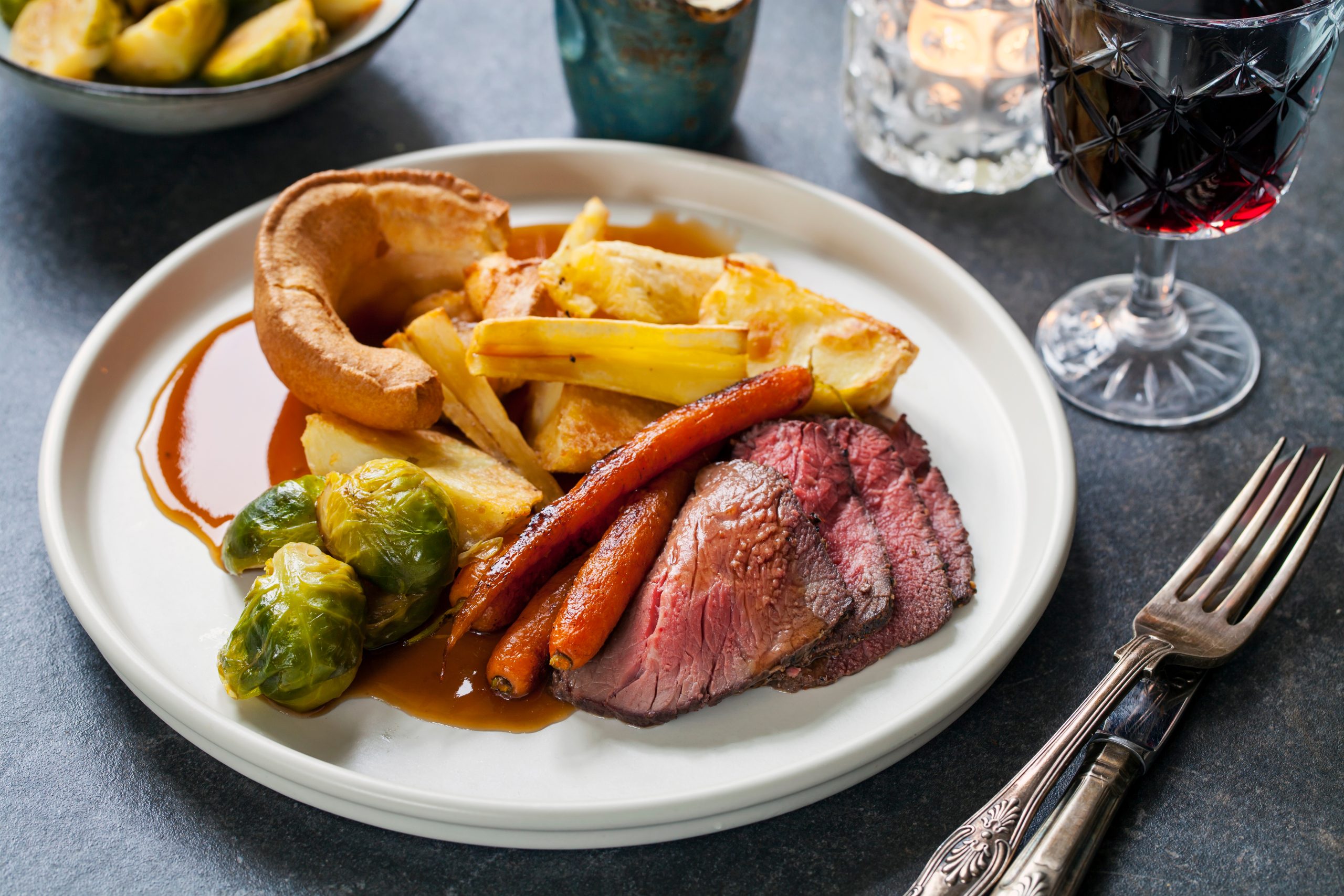
| Sunday roast | Roasted meat (beef, lamb, chicken, or pork) with roast potatoes, Yorkshire pudding, seasonal vegetables, and gravy | Sunday lunchtime, typically served 12:00 to 15:00 |
| Pie and mash | Shortcrust or puff pastry filled with steak and kidney, chicken and leek, or game, served with mashed potato and gravy | Any cold evening |
| Fish and chips | Beer-battered fish (usually cod or haddock) with thick-cut chips, mushy peas, and tartare sauce | Friday is traditional fish day |
| Ploughman’s lunch | Cold plate of cheese, pickle, crusty bread, ham, and salad | Lunchtime, especially in country pubs |
| Scotch egg | Hard-boiled egg wrapped in sausage meat, coated in breadcrumbs, and deep-fried | As a bar snack with a pint |
| Sticky toffee pudding | Dense sponge cake made with dates, drenched in toffee sauce, served with cream or custard | After anything, always |
The Sunday roast deserves special mention. In a good pub, it is a ritual: generous portions of slow-roasted meat, crispy potatoes, a towering Yorkshire pudding, and gravy made from the pan drippings. Most pubs serve it between noon and three on Sundays, and booking is often essential, especially in popular country inns. Arrive hungry. Leave slowly.
Building a Pub Route Into Your Trip
One of the pleasures of travelling through Britain and Ireland in winter is the rhythm of the pub stop. A morning spent walking a coastal path or exploring a market town, followed by lunch beside a fire in a centuries-old inn, followed by an afternoon drive through darkening countryside to the next destination. It is a way of travelling that suits the season perfectly.
Great British Trips can weave pub-focused stops into tailor-made itineraries across England, Scotland, Wales, Northern Ireland, and Ireland. Whether you want a week-long tour of Yorkshire’s moorland pubs, a Scottish Highlands route that follows the whisky trail from inn to inn, or a coastal journey through Wales and Cornwall with a different waterside pub each evening, these routes can be built around your interests, your pace, and the pubs that appeal to you most. Accommodation in historic coaching inns and country house hotels makes the journey between stops as enjoyable as the stops themselves. Ready to plan yours? Get a quote and tell us which pubs are on your list.
Frequently Asked Questions
What are the opening hours for pubs in Britain and Ireland?
Most pubs in England, Wales, and Scotland open from around 11:00 or 12:00 and close between 23:00 and midnight, though hours vary. Sunday hours are sometimes shorter. In Ireland, standard hours are 10:30 to 23:30 Monday to Thursday, 10:30 to 00:30 on Friday and Saturday, and 12:30 to 23:00 on Sunday. Country pubs may close earlier on quiet weekday evenings in winter, so it is worth checking ahead.
Do British pubs serve food all day?
Not usually. Most pubs serve lunch from around 12:00 to 14:30 and dinner from 18:00 to 21:00. Some gastropubs and larger establishments offer food throughout the afternoon, but many kitchens close between services. Sunday roasts are typically served between 12:00 and 15:00. If you are planning to eat, arriving within these windows will save you disappointment.
Are children allowed in British pubs?
Rules vary by establishment. Many pubs welcome children in dining areas and beer gardens during the day, but some bar areas are restricted to adults. In Scotland, the rules are set by local licensing boards, and children are often only allowed in pubs that serve food, usually until the early evening. In Ireland, children under 15 are generally welcome when accompanied by a parent or guardian until 21:00. It is always worth asking when you arrive.
What is real ale, and how is it different from lager?
Real ale is beer that is brewed using traditional methods and served from a cask without additional gas pressure. It is naturally carbonated, served at cellar temperature (around 11 to 13 degrees Celsius), and has a fuller, more complex flavour than most lagers. Britain has thousands of small breweries producing real ales, and a good pub will typically have three to six on tap at any time. Ask the bartender for a recommendation; they will know what is drinking well that day.
Can Great British Trips arrange a pub-themed itinerary?
Yes. Great British Trips specialises in tailor-made touring holidays across Britain and Ireland, and pub-focused routes are one of the most popular requests from international visitors. Your itinerary can include stays at historic coaching inns, guided brewery visits, Sunday roast reservations at acclaimed gastropubs, and driving or walking routes designed around the best pubs in each region. Every trip is planned around your preferences, with accommodation, transport, and local recommendations arranged in advance.


