
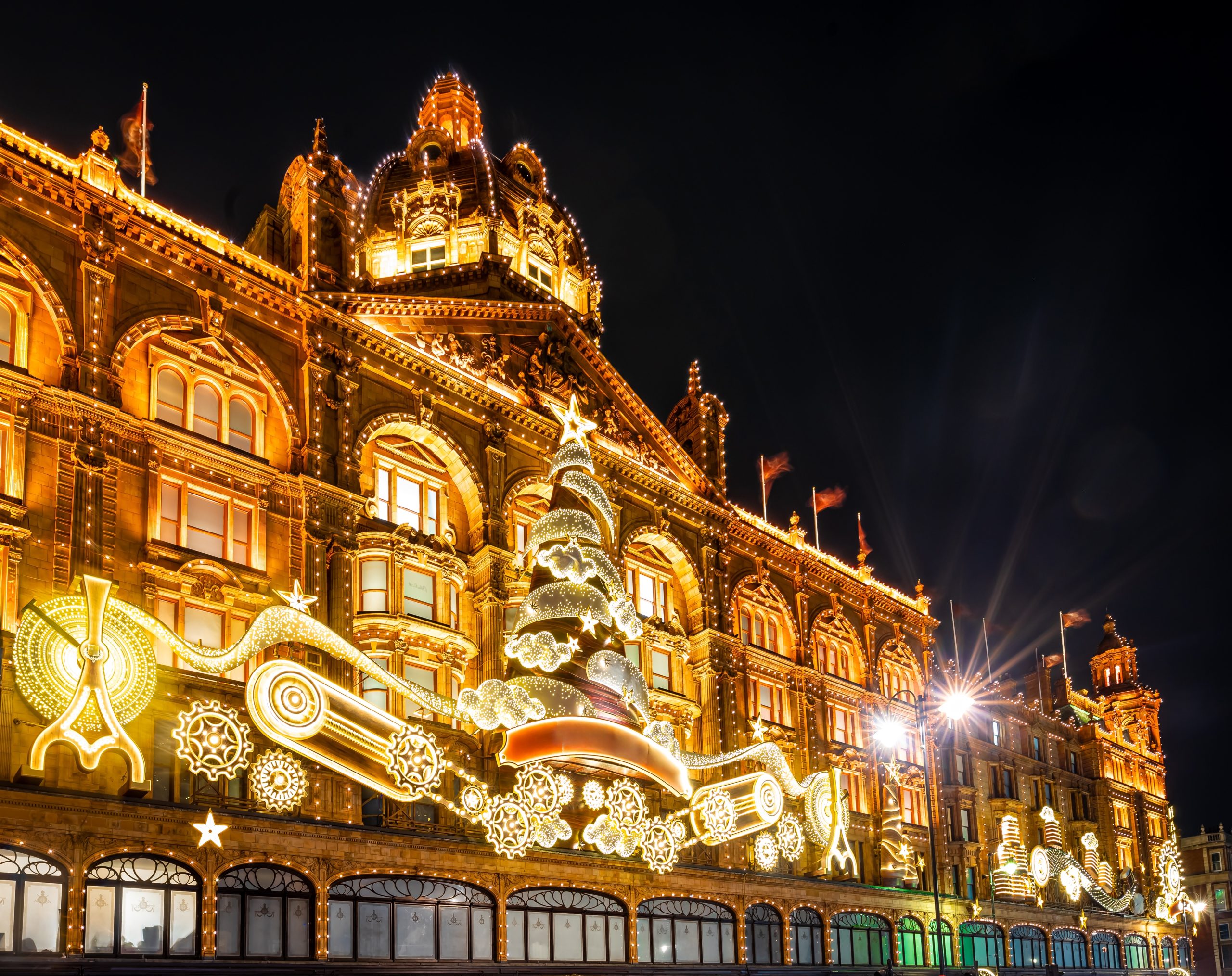
A Cultural Christmas: Britain and Ireland’s Best Theatres, Pantos and Festive Shows
There is a moment, somewhere around mid-December, when Britain and Ireland transform into something close to a living storybook. Frost clings to Georgian facades, fairy lights drape across cobbled lanes, and from behind the heavy doors of theatres and cathedrals comes the unmistakable sound of a nation throwing itself headlong into the festive season. For international visitors, this is a side of Britain and Ireland that goes far beyond mince pies and mulled wine. It is a place where culture, tradition and spectacle collide in the most joyful way imaginable.
From the riotous chaos of pantomime to the hush of a candlelit carol service in a medieval cathedral, a cultural Christmas here is something you carry with you long after the decorations come down. Here is your guide to the best of it.
Pantomime: A Gloriously British Tradition
If you have never encountered pantomime, you are in for a treat. And possibly some confusion. Panto, as the British affectionately call it, is a theatrical tradition dating back centuries, rooted in Italian commedia dell’arte but evolved into something entirely, wonderfully British. It runs from late November through to January, and for many families, it is as essential to Christmas as the turkey itself.
The format follows a loose fairy tale plot: Cinderella, Jack and the Beanstalk, Aladdin, Snow White, Sleeping Beauty. But the story is almost beside the point. What matters is the ritual. The audience is not passive here. You will be expected to participate, and with gusto.
What to Expect Inside a Pantomime
A few things to prepare yourself for:
- “He’s behind you!” When the villain creeps up on the hero, the entire audience, children and grandparents alike, will scream this at the top of their lungs. Join in. It is mandatory.
- “Oh no it isn’t! / Oh yes it is!” This call-and-response exchange between the cast and audience will happen repeatedly. You will pick it up within seconds.
- The Dame. A central female character, traditionally the hero’s mother, played by a man in outrageous drag. The costumes get bigger and more absurd as the show progresses. This is not meant to mock anyone; it is pure comic tradition stretching back to the Victorian era.
- The Principal Boy. The young male hero, historically played by a woman. Gender-swapping is baked into panto’s DNA.
- Celebrity casting. Major pantos will feature well-known television personalities, pop stars, or comedians. Part of the fun is seeing a famous face you may recognise being pelted with sweets or drenched in slime.
- Slapstick, songs, and jokes. Expect terrible puns, innuendos that sail over children’s heads, singalongs, and at least one scene involving a messy cooking demonstration.
Pantomime is loud, chaotic, interactive, and enormously fun. It is also one of the most family-friendly experiences in British theatre, suitable for children as young as three or four.
Where to See Pantomime
Nearly every town in Britain stages a panto, from village halls to grand theatres. Some of the best-known productions include:
| Venue | Location | Notes |
|---|---|---|
| London Palladium | London | The flagship panto, usually with major star casting and lavish production values. Cinderella is the 2026 show, from 5 December |
| Birmingham Hippodrome | Birmingham | One of the biggest panto stages in the country, consistently spectacular |
| Theatre Royal, Nottingham | Nottingham | A beloved regional panto with a loyal following |
| King’s Theatre | Edinburgh | One of Scotland’s best-loved pantomimes, with a distinctly Scottish sense of humour |
| Grand Opera House | Belfast | Northern Ireland’s go-to for festive family theatre. The Little Mermaid is the 2026 show, from late November |
| New Theatre | Cardiff | Wales brings its own warmth and wit to the panto tradition |
The West End at Christmas
London’s West End is electric at any time of year, but in December it takes on a particular sparkle. The streets around Covent Garden, Soho and Shaftesbury Avenue are lit up, the restaurants are buzzing with pre-theatre diners, and the theatres themselves are running some of their most popular productions.
Many long-running musicals and plays mount special Christmas performances, and it is common for new productions to open in the weeks before Christmas, hoping to capture the festive audience. December is also when limited-run holiday shows appear: think seasonal revues, one-off concerts by major artists, and special charity galas.
For international visitors, seeing a West End show is already on many wish lists. Doing so in December, with the city dressed in its finest and the atmosphere at its most celebratory, elevates the experience considerably.
Booking Tips for West End Shows
- Book two to three months ahead for popular December performances. The most sought-after shows will sell out for weekend evenings and school holiday matinees well in advance. If you are reading this late in the year, check availability now, as weekday and early-December dates are the likeliest to have seats left.
- Matinee performances (usually 2:00pm or 2:30pm) are excellent for families with younger children and leave your evening free for dinner.
- Evening performances (typically 7:30pm) suit those who want to make a proper night of it: dinner beforehand, a show, then a walk through the illuminated streets afterwards.
- Dress codes are relaxed at most West End theatres. Smart casual is the norm. You will see everything from jeans to cocktail dresses, and nobody minds either way.
- Many theatres offer accessible performances, including audio-described, captioned, and relaxed performances for those with sensory sensitivities.
The Nutcracker at the Royal Opera House
For something more refined but no less magical, Tchaikovsky’s The Nutcracker at the Royal Opera House in Covent Garden is one of London’s great Christmas traditions. The Royal Ballet’s production, originally choreographed by Peter Wright, has been enchanting audiences since 1984, and its combination of exquisite dancing, a lavish set design, and that soaring score makes it feel like Christmas distilled into two hours.
The story follows Clara on a dream journey through a snowy kingdom of dancing snowflakes, the Sugar Plum Fairy, and a battle with the Mouse King. It is suitable for children from around age five or six, though younger ones may find the two-and-a-half-hour running time a challenge.
Tickets for The Nutcracker are among the most coveted in London’s Christmas calendar. Performances usually run from late November through to early January, but December dates sell quickly. Booking as early as possible is strongly advisable.
The Royal Opera House itself is worth arriving early for. The building is magnificent, and the Amphitheatre Restaurant on the top floor offers views across Covent Garden’s rooftops that feel especially festive after dark.
Christmas at Kew
Stepping away from the traditional stage for a moment, Christmas at Kew is an outdoor spectacle that has become one of London’s most popular seasonal events. The Royal Botanic Gardens at Kew, already a UNESCO World Heritage Site, are transformed each winter into an illuminated trail winding through ancient trees, glasshouses and lakeside paths.
This is not theatre in the conventional sense, but it is undeniably performative. Thousands of lights are choreographed to music. Installations shimmer in the canopy. A tunnel of light stretches overhead. The finale, a cascade of lasers and projections reflected in the lake beside the Palm House, is genuinely breathtaking.
The trail takes about ninety minutes to walk at a leisurely pace, and there are food stalls and mulled wine along the route. It usually runs from mid-November to early January, and timed entry slots help manage the crowds, though weekend evenings will always be busier.
It is particularly good for families and for anyone who wants a festive experience that feels immersive without requiring you to sit still for two hours.
Carol Services in Britain and Ireland’s Great Cathedrals
If pantomime represents the raucous, joyful end of the Christmas spectrum, then a cathedral carol service sits at the other: contemplative, beautiful, and deeply atmospheric. Britain and Ireland’s great cathedrals and churches host carol services throughout December, and attending one, whether you are religious or not, is one of the most moving experiences the season has to offer.
Westminster Abbey, London
The Abbey’s services are among the most famous in the world. The Festival of Nine Lessons and Carols weaves scripture readings with traditional hymns and choral music performed by the Abbey’s own choir. The setting, beneath soaring Gothic vaults in a building that has witnessed a thousand years of English history, is extraordinary. The most popular services need free tickets booked in advance, usually released from mid-November, so check the Abbey’s website early.
St Paul’s Cathedral, London
St Paul’s offers a similarly powerful experience, with its vast dome creating acoustics that make the choir sound otherworldly. The cathedral runs several carol services through December, some ticketed and some open to all.
Canterbury Cathedral, Kent
The mother church of the Anglican Communion, Canterbury Cathedral has been a place of pilgrimage for nearly a millennium. Its Christmas services carry a particular weight of history. The medieval cloisters and the great nave, lit by candlelight, create an atmosphere that is difficult to replicate anywhere else.
Christ Church Cathedral, Dublin
Crossing the Irish Sea, Christ Church Cathedral in Dublin’s medieval quarter hosts beautiful Christmas services with its renowned choir. The cathedral dates to 1030 and its intimate scale makes the experience feel personal and warm. Dublin adds its own character to the festive season, and combining a cathedral service with the city’s Christmas markets and Georgian streetscapes (see our Christmas in Ireland guide) makes for a memorable day.
Edinburgh’s Christmas
Edinburgh at Christmas is a city that seems purpose-built for the season. The medieval Old Town, the elegant Georgian New Town, the castle perched on its volcanic rock: when you add festive lights, a Christmas market in Princes Street Gardens, and a programme of cultural events, the effect is almost impossibly atmospheric.
The city runs a dedicated Edinburgh’s Christmas festival from mid-November through to early January. Highlights usually include fairground rides, the market stalls and a busy schedule of live music and street performance.
For theatre, the King’s Theatre stages one of Scotland’s best-loved pantomimes, while the Royal Lyceum programmes a major Christmas production, A Christmas Carol in 2026. The city’s smaller venues, including the Traverse Theatre and Summerhall, offer alternative seasonal programming for those who prefer something off the beaten track.
Edinburgh is also where you will encounter a distinctly Scottish approach to the festive season. Hogmanay, the Scottish New Year celebration, is legendary, but the weeks leading up to it, covered in our Christmas and Hogmanay in Scotland guide, are filled with ceilidh dances, whisky tastings, and concerts that give December here a flavour all its own.
Belfast’s Festive Theatre
Belfast has undergone a remarkable cultural renaissance, and its Christmas theatre scene reflects that energy. The Grand Opera House, a beautifully restored Victorian theatre on Great Victoria Street, is the centrepiece of the city’s festive programming, staging a major pantomime each year that draws audiences from across Northern Ireland.
The Lyric Theatre, situated on the banks of the River Lagan, often programmes a Christmas show with a more literary bent, ranging from seasonal adaptations to new writing with a festive theme. The MAC (Metropolitan Arts Centre) in the Cathedral Quarter adds contemporary performance, visual art, and family workshops to the mix.
Belfast’s Christmas Continental Market, set in the grounds of City Hall (more in our Belfast travel guide), provides the perfect pre-show or post-show wander, with European food stalls, craft vendors, and the scent of roasted chestnuts mingling with the cold night air.
Regional Theatres Worth a Detour
Some of the most rewarding festive theatre experiences in Britain happen outside the capital. Regional theatres take enormous pride in their Christmas productions, and the quality is consistently high. A few to consider:
- The Old Vic, Bristol. One of the oldest working theatres in the English-speaking world, the Bristol Old Vic stages a Christmas show each year that draws on the city’s creative spirit.
- Royal Exchange Theatre, Manchester. Housed in a stunning glass-and-steel module inside a former cotton exchange, this is one of England’s most distinctive theatre spaces. Its Christmas production is always worth seeing.
- Stephen Joseph Theatre, Scarborough. Alan Ayckbourn’s home theatre on the Yorkshire coast. The Christmas programme here often features world premieres and has an intimate, slightly eccentric charm.
- Pitlochry Festival Theatre, Perthshire. A Highland theatre with a December programme that, combined with the surrounding Scottish landscape in winter, makes for an unforgettable escape.
Practical Information for Festive Theatre and Events
| Topic | Detail |
|---|---|
| When to book | Two to three months ahead for popular shows, especially The Nutcracker, major pantos, and West End hits in December |
| Best for families | Pantomime (ages 3+), Christmas at Kew (all ages), The Nutcracker (ages 5+) |
| Matinee or evening? | Matinees suit families and those who want a relaxed pace. Evenings are ideal for couples or anyone wanting the full night-out experience |
| Dress code | Smart casual is fine almost everywhere. The Royal Opera House skews slightly dressier but there is no strict code |
| Duration | Pantos: 2 to 2.5 hours. West End shows: 2 to 3 hours. Carol services: 1 to 1.5 hours. Christmas at Kew: 90 minutes |
| Accessibility | Most major venues offer accessible seating, audio description, captioning, and relaxed performances. Check individual theatre websites |
| Cathedral services | Many are free but require advance tickets or early queuing. Check cathedral websites as early as you can |
Weaving It All Together
The beauty of a festive cultural trip to Britain and Ireland is the sheer range available. You could begin with a carol service in Canterbury, travel to London for a West End show and The Nutcracker, head north to Edinburgh for its Christmas festival, and cross to Dublin or Belfast for their own distinctive seasonal offerings. Or you could focus on a single city and dive deep into its Christmas programme.
Great British Trips specialises in tailor-made itineraries that bring together exactly this kind of experience, combining festive cultural highlights with handpicked accommodation, private transfers, and local insight to create a Christmas trip that feels effortless. If markets are on your wish list too, take a look at our guide to Christmas markets in the UK. Whether you want front-row panto seats, a backstage tour of a historic theatre, or a candlelit dinner after a cathedral carol service, a bespoke itinerary can make it happen.
Ready to plan your own festive escape? Request a quote and we will start building it with you.
Frequently Asked Questions
What is pantomime and is it suitable for international visitors?
Pantomime is a uniquely British form of comic theatre performed during the Christmas season, based on fairy tales and featuring audience participation, slapstick comedy, music, and elaborate costumes. It is performed in English but relies heavily on visual comedy and interaction, making it accessible and enjoyable for international visitors regardless of language fluency. It is one of the most family-friendly theatre experiences available, suitable for children as young as three.
How far in advance should I book Christmas theatre tickets in Britain?
For the most popular productions, including The Nutcracker at the Royal Opera House, major West End shows, and flagship pantomimes at venues like the London Palladium or Birmingham Hippodrome, booking two to three months ahead is advisable. Some performances sell out even earlier. Midweek performances and early-December dates tend to have better availability than weekends closer to Christmas.
Is there a dress code for attending theatre or carol services in the UK?
Most British theatres have a relaxed dress code, and smart casual clothing is appropriate almost everywhere. The Royal Opera House and some West End theatres tend to attract slightly dressier audiences, but there is no enforced code. For cathedral carol services, modest and warm clothing is recommended, as historic churches can be cold in December. Comfortable shoes are essential for outdoor events like Christmas at Kew.
Can I see festive shows and events outside London?
Absolutely. Edinburgh, Belfast, Dublin, Manchester, Bristol, Birmingham, Cardiff, and Nottingham all have thriving festive theatre scenes. Regional theatres often produce Christmas shows of exceptional quality, and combining them with local Christmas markets, historic architecture, and seasonal food creates a rich experience that is quite different from London. Many visitors find regional cities offer a more intimate and atmospheric Christmas.
What festive cultural experiences are suitable for young children?
Pantomime is the top recommendation for young families, with most productions welcoming children from age three. Christmas at Kew is suitable for all ages and allows children to move freely along the illuminated trail. The Nutcracker is best enjoyed by children aged five and above who can sit comfortably for a longer performance. Many theatres also run dedicated children’s Christmas shows and workshops during the school holidays, designed for toddlers and early-years audiences.