
Remembrance and Reflection: Visiting War Memorials and Battlefields in Britain and Ireland
Britain and Ireland carry the weight of centuries of conflict in their landscapes, their architecture, and their collective memory. From the solemn hush of a London cenotaph to the windswept moorland of a Scottish battlefield, these islands offer travellers a deeply moving way to connect with the human stories behind the history books.
This is not tourism in the conventional sense. Visiting war memorials and battlefields is an act of remembrance, a chance to stand where ordinary people faced extraordinary circumstances and to reflect on what their sacrifices mean today. Whether you are tracing a family connection, deepening your understanding of world events, or simply drawn to places where history feels most alive, Britain and Ireland reward the thoughtful visitor with experiences that stay with you long after you return home.
London: Where a Nation Remembers
The Cenotaph, Whitehall
Standing in the centre of Whitehall, the Cenotaph is deceptively simple. Designed by Sir Edwin Lutyens and unveiled in 1920, this Portland stone monument bears no religious symbols, no names, and no decoration beyond the words “The Glorious Dead” and carved wreaths of laurel. That simplicity is precisely what gives it such power.
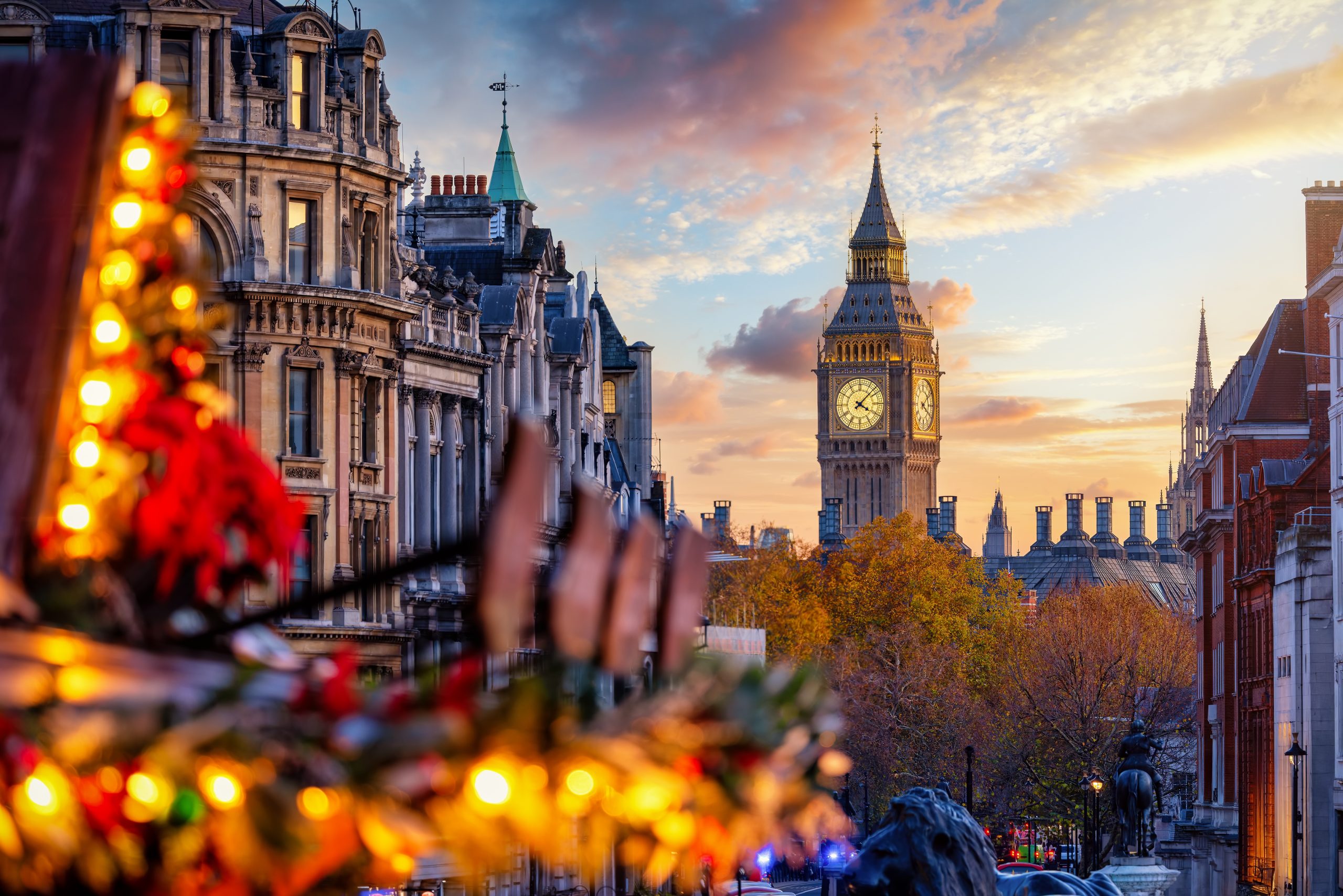
The Cenotaph, whose name comes from the Greek for “empty tomb,” serves as the focal point of the United Kingdom’s remembrance. Each November, the reigning monarch, political leaders, and veterans gather here for the National Service of Remembrance. But you do not need to visit on that day to feel its significance. On any given afternoon, you will see fresh wreaths laid at its base, left by regiments, veterans’ associations, and individuals who have never stopped remembering.
The Cenotaph is freely accessible at all times, standing on the public pavement of Whitehall between Downing Street and the Palace of Westminster. Many visitors combine a visit with a walk through nearby Parliament Square and St James’s Park. If London is your starting point, it slots neatly into a London and Oxford itinerary.
Imperial War Museum, London
A short distance south of the Thames, the Imperial War Museum occupies what was once the Bethlem Royal Hospital, and that history of human suffering lends the building an unintentional resonance. The museum’s collections span conflicts from the First World War to the present day, but it is the personal stories that make this place extraordinary.
The First World War galleries, redesigned for the centenary in 2014, immerse you in the experience of trench warfare through letters, photographs, uniforms, and reconstructed environments. The Holocaust Exhibition, recommended for visitors aged 14 and above, is among the most affecting museum experiences in Britain. Allow at least three hours, and be prepared to sit quietly afterwards.
The Imperial War Museum London is open daily from 10:00 to 18:00, with free admission to the permanent galleries. It is a ten-minute walk from Lambeth North Underground station.
HMS Belfast
Moored on the Thames between Tower Bridge and London Bridge, HMS Belfast is one of only three surviving ships from the D-Day bombardment fleet. This Town-class light cruiser was launched in 1938 and served until 1963, seeing action at the Battle of North Cape and providing fire support during the Normandy landings on 6 June 1944.
Walking through her nine decks, from the cramped mess areas where sailors ate and slept to the exposed bridge and the echoing engine rooms below the waterline, gives you a visceral understanding of what naval service demanded. The interactive exhibits bring to life the conditions of Arctic convoys and the sheer scale of D-Day operations.
HMS Belfast is open daily, with shorter hours in winter (typically 10:00 to 17:00) and later closing in summer. Tickets can be booked in advance through Imperial War Museums.
Beyond London: Memorials Across England
Bletchley Park, Buckinghamshire
Bletchley Park is not a war memorial in the traditional sense, but what happened behind its modest Victorian walls arguably shortened the Second World War by two years and saved millions of lives. This was the home of Britain’s codebreakers, where Alan Turing, Dilly Knox, and thousands of others, many of them young women recruited for their aptitude with languages and puzzles, cracked the German Enigma and Lorenz ciphers.
The site has been beautifully restored to tell this story. You can see the original Hut 6 and Hut 8 where much of the codebreaking took place, examine an operational Enigma machine, and follow the intellectual journey that led to the creation of Colossus, the world’s first programmable electronic computer. The story is one of quiet, determined brilliance under extraordinary pressure.
Bletchley Park is open daily from 09:30, closing at 16:00 in winter and 17:00 in summer, with last entry a couple of hours before closing. It is located beside Bletchley railway station, roughly 50 minutes from London Euston. Guided tours run regularly and are well worth joining for the personal anecdotes that bring the place to life.
Coventry Cathedral
On the night of 14 November 1940, the Luftwaffe dropped over 500 tonnes of high explosives on Coventry in a raid that lasted more than eleven hours. The medieval Cathedral Church of St Michael was gutted by fire, leaving only its tower, outer walls, and the haunting silhouette of its window tracery.
What makes Coventry extraordinary is the decision made in the ruins. Rather than rebuilding the old cathedral, the people of Coventry chose to preserve the shell as a permanent memorial and to build a new cathedral alongside it. Sir Basil Spence’s modernist masterpiece, consecrated in 1962, stands in deliberate conversation with the ruin, connected by a covered walkway. The altar of the ruined cathedral is made from fallen masonry, and behind it stands a cross of charred roof beams, with the words “Father Forgive” inscribed on the sanctuary wall. The message is not “Father forgive them” but simply “Father Forgive,” an acknowledgement of shared humanity that extends forgiveness to all sides.
Both the ruins and the new cathedral are open daily, with guided tours available. The combined experience is one of the most powerful statements about conflict and reconciliation anywhere in the world.
Battle of Britain Memorial, Dover
On the white cliffs above Dover, overlooking the English Channel that separates Britain from continental Europe by just 21 miles, the National Memorial to the Few honours the 544 airmen of Fighter Command who lost their lives during the Battle of Britain in the summer and autumn of 1940.
The memorial, set into the clifftop with a propeller sculpture at its centre, includes a Wing exhibition telling the story of those desperate weeks when the outcome of the air war was genuinely uncertain. The Christopher Foxley-Norris Memorial Wall records the names of almost 3,000 airmen of “the Few”, representing not only British servicemen but also pilots from Poland, Czechoslovakia, New Zealand, Canada, and many other nations who flew with the RAF.
The memorial grounds are open to visitors on foot every day, while The Wing visitor centre keeps seasonal hours, so check ahead if you are visiting in winter. The setting itself is worth the visit, with views across the Channel that help you understand why this narrow stretch of water has mattered so much throughout British history.
Imperial War Museum North, Manchester
Daniel Libeskind’s striking aluminium-clad building at Salford Quays tells the story of how war shapes lives. The architecture itself is designed to disorient, with sloping floors and fragmented spaces that evoke the disruption conflict brings. Inside, the museum takes a thematic rather than chronological approach, exploring how wars affect people, places, and daily life.
The Big Picture Show, projected across the entire interior walls, is a powerful audio-visual experience that runs several times daily. The museum gives particular attention to the home front and to the experiences of those whose stories are less commonly told, including conscientious objectors, refugees, and civilians caught in bombing campaigns.
Imperial War Museum North is open daily from 10:00 to 17:00, with free admission. It is accessible via MediaCityUK tram stop.
Scotland: Ancient and Modern Conflict
Scottish National War Memorial, Edinburgh Castle
Within the walls of Edinburgh Castle, occupying the Crown Square at the summit of Castle Rock, the Scottish National War Memorial is one of the most beautiful commemorative spaces in Britain. Designed by Sir Robert Lorimer and opened in 1927, it records the names of Scottish servicemen and women lost in conflicts from the First World War onwards, with additional rolls of honour added after subsequent wars.
The interior is rich with symbolism. Stained glass, carved stone, regimental colours, and metalwork combine to create a space that feels both grand and intimate. At its heart, a steel casket resting on a green marble base contains the rolls of honour. The building itself incorporates part of the medieval church of St Mary that previously stood on the site, connecting Scotland’s military sacrifice to centuries of history.
Edinburgh Castle is open daily year-round, typically 09:30 to 17:00 (extended hours in summer). The War Memorial is included in the castle admission. Allow time to absorb the atmosphere rather than hurrying through.
Culloden Battlefield, Inverness
On a bleak stretch of moorland east of Inverness, the last pitched battle fought on British soil took place on 16 April 1746. In less than an hour, the Hanoverian government forces under the Duke of Cumberland routed the Jacobite army of Prince Charles Edward Stuart, effectively ending the Jacobite cause and ushering in decades of brutal repression of Highland culture.
Culloden is a place of deep emotion, particularly for visitors with Scottish heritage. The battlefield has been carefully restored to something closer to its 1746 appearance, with clan grave markers, memorial cairns, and walking paths across the moor. The visitor centre, run by the National Trust for Scotland, provides essential context through its exhibition and immersive battle experience.
| Practical Information | Details |
|---|---|
| Opening months | Visitor centre open year-round; battlefield accessible at all times |
| Typical hours | Seasonal, with shorter hours in winter; check the National Trust for Scotland website before you go |
| Guided tours | Available daily; audio guides recommended |
| Getting there | Approximately 6 miles east of Inverness, accessible by local bus or car |
| Time needed | Allow 2 to 3 hours for the centre and battlefield walk |
Walk the field slowly. Stand at the memorial cairn. Read the clan markers. This is a place that asks for your time and your silence. Culloden is also an easy addition to a stay in Inverness and the Highlands.
Ireland and Northern Ireland: Shared Histories
Somme Heritage Centre, County Down, Northern Ireland
Near the town of Newtownards, the Somme Heritage Centre (also known as the Somme Museum) tells the story of Ireland’s involvement in the First World War, with particular focus on the devastating first day of the Battle of the Somme on 1 July 1916, when the 36th (Ulster) Division suffered catastrophic casualties at Thiepval.
The centre explores the experiences of soldiers from across the island of Ireland, including both the 36th (Ulster) Division and the 16th (Irish) Division, whose shared sacrifice on the Western Front is sometimes overshadowed by the political divisions that followed. The exhibitions include reconstructed trenches, personal artefacts, and oral histories that bring individual stories to the fore.
Opening days at the Somme Heritage Centre are limited and change with the season, so check with the Somme Association and arrange your visit in advance. Guided tours are highly recommended for the depth of knowledge the guides offer. It pairs well with a historic Northern Ireland tour.
Kilmainham Gaol, Dublin
Few buildings in Ireland carry more historical weight than Kilmainham Gaol. This imposing limestone prison, which held prisoners from 1796 to 1924, was the site of the executions of fourteen leaders of the 1916 Easter Rising, events that transformed Irish public opinion and set in motion the chain of events leading to Irish independence.
Walking through the gaol’s corridors, standing in the cells where Padraig Pearse, James Connolly, and their comrades spent their final hours, and visiting the stone-breakers’ yard where the executions took place, is a profoundly moving experience. The guided tour, which is the only way to see the interior, provides thoughtful, balanced context for these complex events.
Kilmainham Gaol is one of Dublin’s most popular visitor attractions, and advance booking is strongly recommended. Tours run daily throughout the year, with the last tour earlier in winter, so book your slot as soon as your dates are fixed. The gaol is a short bus or tram ride from Dublin city centre, and fits easily alongside the must-sees of Dublin.
Visiting with Respect: What to Know Before You Go
Remembrance Sunday
Remembrance Sunday, observed on the second Sunday of November each year, is the most significant day of national commemoration in the United Kingdom. Services take place at war memorials in virtually every city, town, and village across the country, with the principal ceremony held at the Cenotaph in London. In 2026 it falls on 8 November, with Armistice Day on Wednesday 11 November, and in 2027 it falls on 14 November.
If you are visiting during this period, you will notice the country wearing poppies, observing two-minute silences, and gathering at memorials. It is a moving time to be in Britain, and visitors are welcome to observe and participate.
Poppy Etiquette
The red poppy is the symbol of remembrance in the United Kingdom, worn from late October through Remembrance Sunday. Poppies are available from the Royal British Legion, typically sold by volunteers outside shops and stations, in exchange for a donation. There is no correct way to wear a poppy and no obligation to do so, but wearing one is a widely understood mark of respect. In the Republic of Ireland and parts of Northern Ireland, the poppy carries more complex associations, and visitors should be aware that its meaning varies depending on community and context.
General Guidance for Visiting War Sites
- Maintain a respectful and quiet demeanour, particularly at graves and memorials
- Photography is generally permitted outdoors, but check individual policies for indoor spaces and sacred areas
- Guided tours are available at most sites and add immeasurable depth to the experience
- Allow more time than you think you need; these are not places to rush through
- Many sites have bookshops with excellent further reading if a particular story captures your attention
Planning a Heritage and History Itinerary
The sites described here span the length and breadth of Britain and Ireland, from the white cliffs of Dover to the highlands of Scotland and the streets of Dublin. Connecting them into a coherent journey requires thought about geography, pacing, and the emotional weight of what you are experiencing.
Great British Trips specialises in tailor-made itineraries that can weave these memorial sites into a broader journey through Britain and Ireland. Whether you want to follow a specific thread of military history, trace a family member’s wartime service, or simply include meaningful heritage visits alongside other experiences, their team can help you plan a trip that moves at the right pace and gives each site the time it deserves. A day at Culloden is very different from a day at Bletchley Park, and a well-planned itinerary respects those differences.
When you’re ready to plan, tell us what you’d like to see and we’ll build it around you.
Frequently Asked Questions
Is Remembrance Sunday a good time to visit Britain for military history?
Remembrance Sunday, held on the second Sunday of November, is a deeply moving time to visit. The Cenotaph ceremony in London is the centrepiece, but services take place at memorials across the country. If you time your visit for early to mid-November (Remembrance Sunday is 8 November in 2026 and 14 November in 2027), you can experience the national mood of remembrance alongside your visits to historic sites. Be aware that some sites may have altered schedules on Remembrance Sunday itself.
Are these war memorials and museums suitable for children?
Most of the sites mentioned welcome families, though some content requires maturity to process. The Imperial War Museum London recommends its Holocaust Exhibition for visitors aged 14 and above. Bletchley Park and HMS Belfast tend to be particularly engaging for younger visitors, with interactive elements and the sheer fascination of exploring a warship or a codebreaking station. Culloden Battlefield and the outdoor memorials are suitable for all ages.
Do I need to book in advance for these sites?
Advance booking is essential for Kilmainham Gaol, which is guided tour only and frequently sells out. It is strongly recommended for Bletchley Park and HMS Belfast during peak season. The Cenotaph, Coventry Cathedral ruins, and outdoor memorials like the Battle of Britain Memorial at Dover require no booking. For indoor museums such as the Imperial War Museum sites, booking is free but advisable, particularly for special exhibitions.
Can Great British Trips arrange a military history itinerary?
Yes. Great British Trips creates tailor-made itineraries across Britain and Ireland and can design a journey focused on military history and heritage. This might include specialist guided tours, visits to regimental museums, battlefield walks, and accommodation in historic settings. Their team can help connect the sites that matter most to you into a trip that works logistically and allows proper time at each location.
What is the best time of year to visit battlefields and outdoor memorials?
Spring through autumn offers the most comfortable conditions for outdoor sites like Culloden Battlefield and the Battle of Britain Memorial at Dover. However, there is something to be said for visiting in November, when the landscape is austere and the national mood of remembrance adds emotional context. Indoor museums and galleries are rewarding year-round. Scotland’s weather is unpredictable at any time of year, so layers and waterproofs are always wise for Culloden.